Household readiness you can measure before the season starts.
A free app helps each household make a hurricane plan and keep it current. A dashboard of anonymous counts shows where readiness is improving, area by area. It complements your own app and alerts.
People feel informed. Most are not prepared.
of Floridians only prepare once a hurricane is approaching
of Floridians say their home is prepared, while 62% say they have the information they need
of US households have tested a family communication plan
Sources: AAA Consumer Pulse, Florida, April 2026 (n=400). FIU Hurricane Preparedness Poll, June 2025 (n=803). FEMA National Household Survey 2023 (n=7,604).
The information is out there. What is missing is a way for each household to act on it before the cone of uncertainty appears.
A household plan in two minutes, kept current
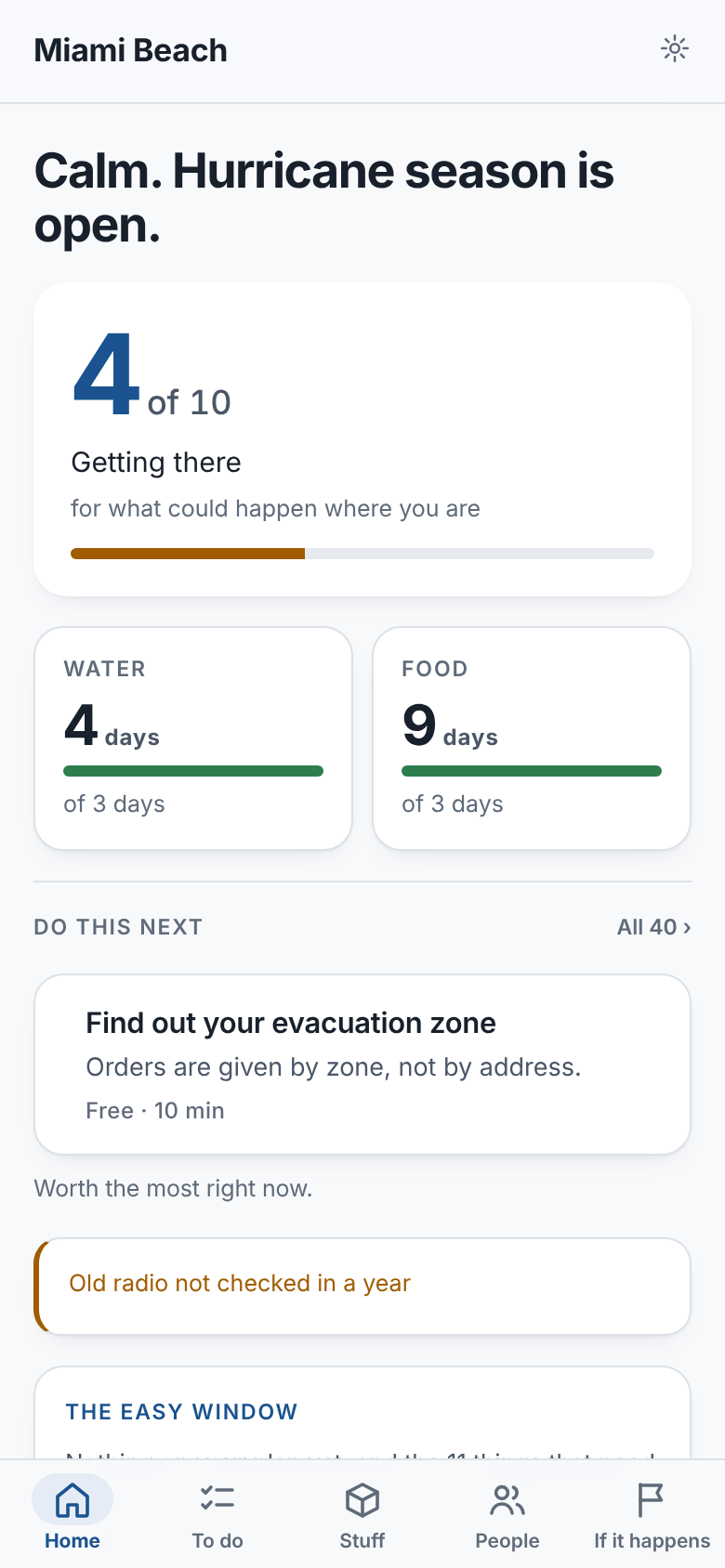
Real screens from the working app. From opening it to a personal answer takes six screens and seven taps. Sign-up asks only for a ZIP code or postcode and an email.
Where they stand
A score that says what it is out of, and the one thing worth doing next.
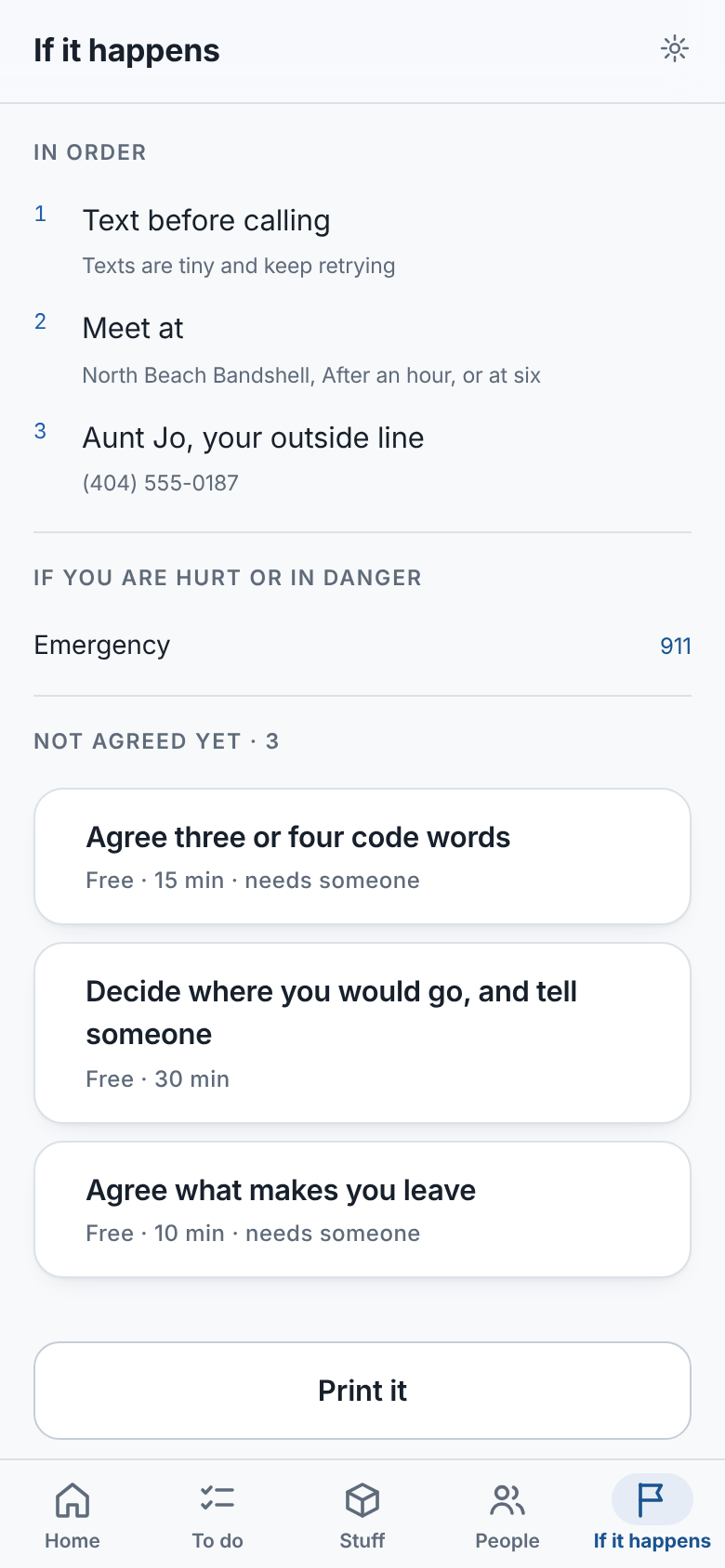
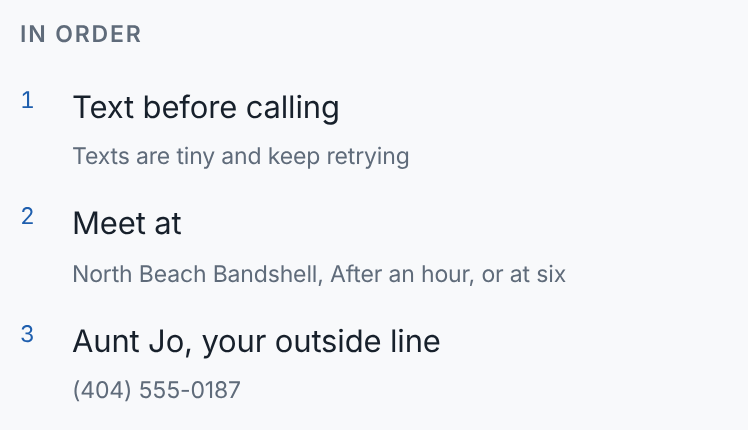
The plan they agreed on
How they reach each other, where they meet, and the out-of-area contact everyone checks in with.
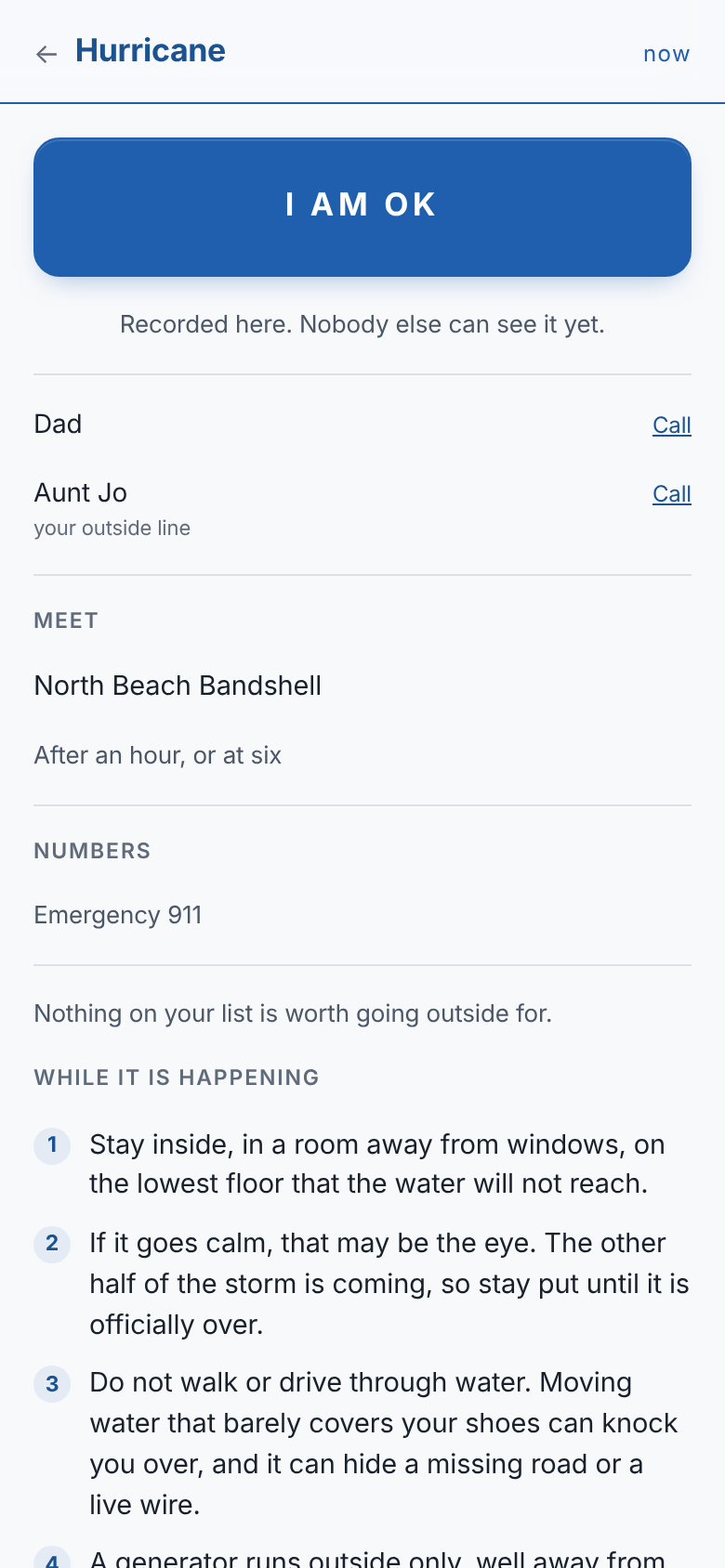
When it happens
One tap records "I am OK" on the phone, next to who they have yet to hear from.
Your area in the app, and the figures behind it
A new area is added through settings, with no new build. Always free for residents.
County and city packs
Your guidance, evacuation zones, shelters and contacts inside the app, linked to ReadyMDC and Know Your Zone. Each city edits its own section.
A dashboard of anonymous counts
Households with a plan, a known zone and a comms plan, by city, ZIP code and condo building. Never an individual household.
Links and QR codes per campaign
See which hurricane guide, mailer or event brought residents in.
Staff logins
Viewer, editor and admin access, so your team can edit content and read the figures.
Readiness, measured area by area
Every figure below is sample data, shown to illustrate the layout and the measures. Counts only: no household is ever shown.
| Area | Signed up | Know zone | Leave plan | Biggest gap |
|---|---|---|---|---|
| ZIP 33139 | 520 | 76% | 58% | Out-of-state contact |
| ZIP 33140 | 390 | 70% | 52% | Medicine for 7 days |
| ZIP 33141 | 440 | 69% | 51% | Water |
| Condo buildings (18) | 610 | 81% | 63% | Meeting point |
Works alongside what you already run
Alerts tell people something is coming. This covers the step before: a household plan that is ready when the alert arrives.
ReadyMDC
Tells a family where to go. The app links to it for zones and shelters.
Know Your Zone
The state evacuation zone lookup. The app uses it and does not copy it.
AlertFlorida and Wireless Emergency Alerts
The official warnings. The app never issues warnings of its own.
Get A Plan
The state PDF plan builder. The app keeps the plan current and makes readiness measurable.
Built for the public sector
Counts, never people
You see numbers by area. Never a name, an email or a household plan.
Works offline
The plan lives on the phone and works with no signal, when it matters most.
Accessible
Meets WCAG 2.2 AA, which covers the ADA Title II requirement, with a conformance report for your records.
Public records
Counts-only reporting keeps household data out of what is held for the county under Chapter 119.
Data and security in detail · Privacy policy · Accessibility statement
From first conversation to live
These dates are a proposal. Each step starts only once the one before is agreed.
First meetings
Agree on the measures, the first cities and the channels.
Agreement
Signed in time to build and test before the season.
Packs and testing
County and city packs, Spanish checked, accessibility audit.
Live all season
Monthly reports, then a season report in December.
See it with your area loaded
Twenty minutes, by call or in person. We will show it working with your hazards and settle what to measure first.